By admin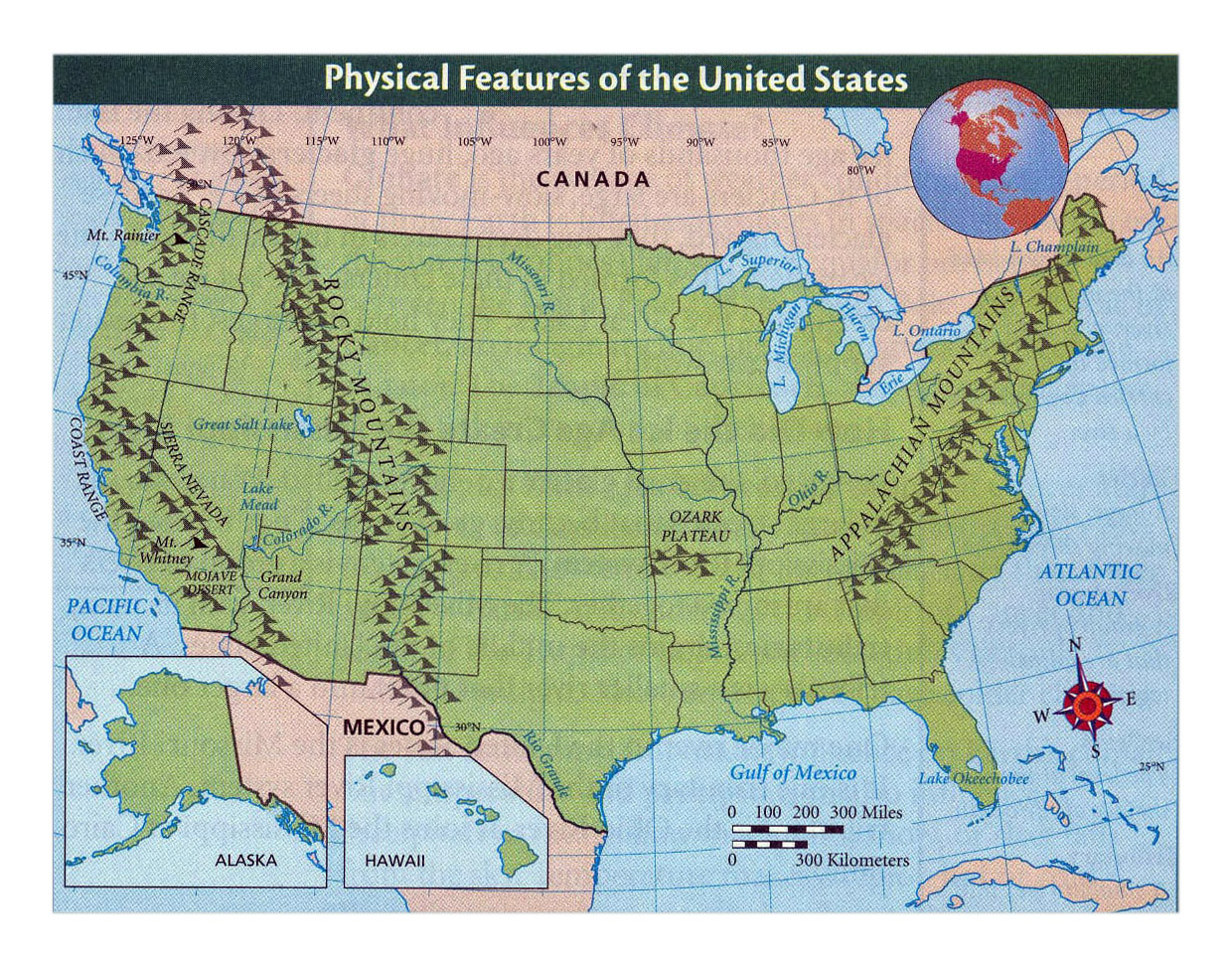
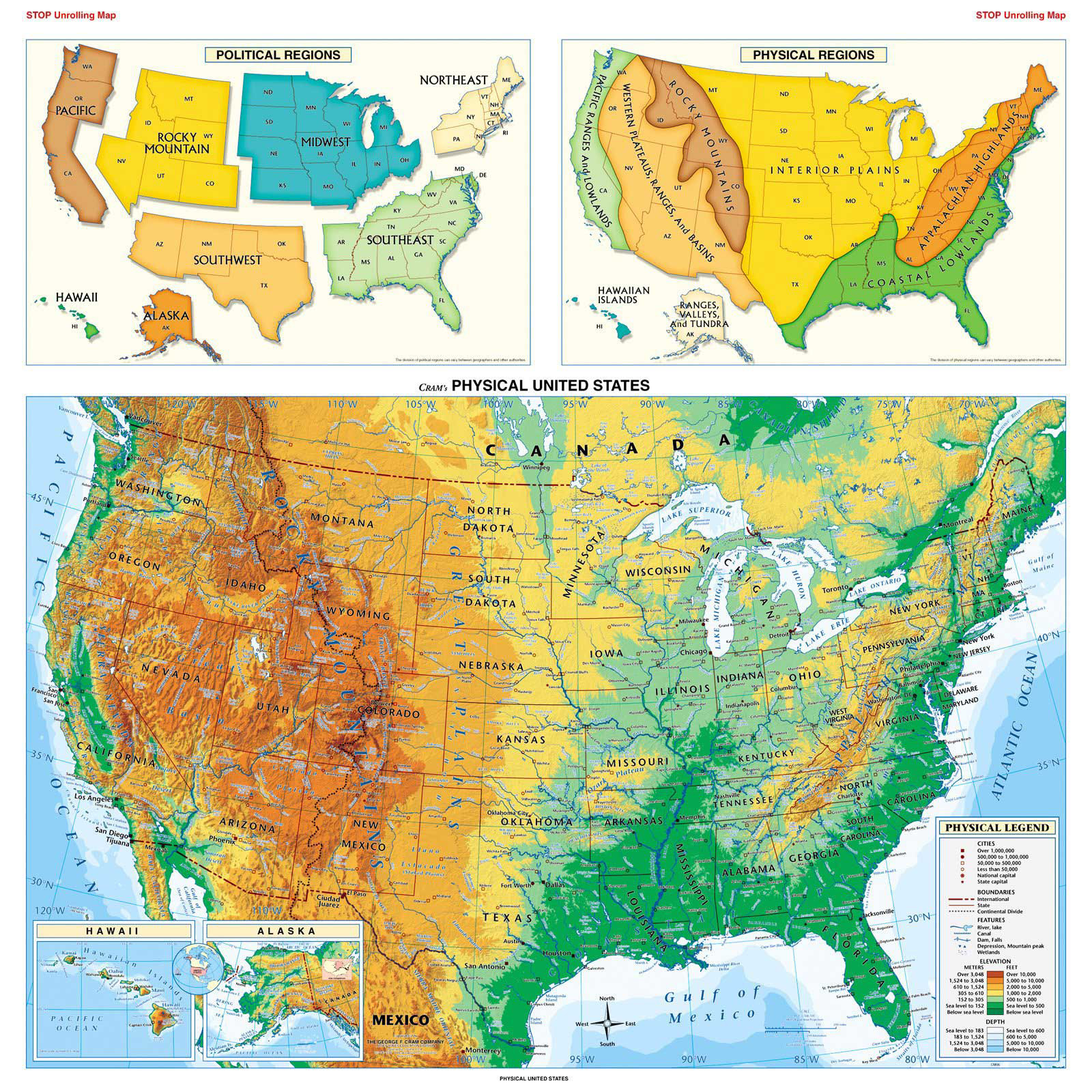
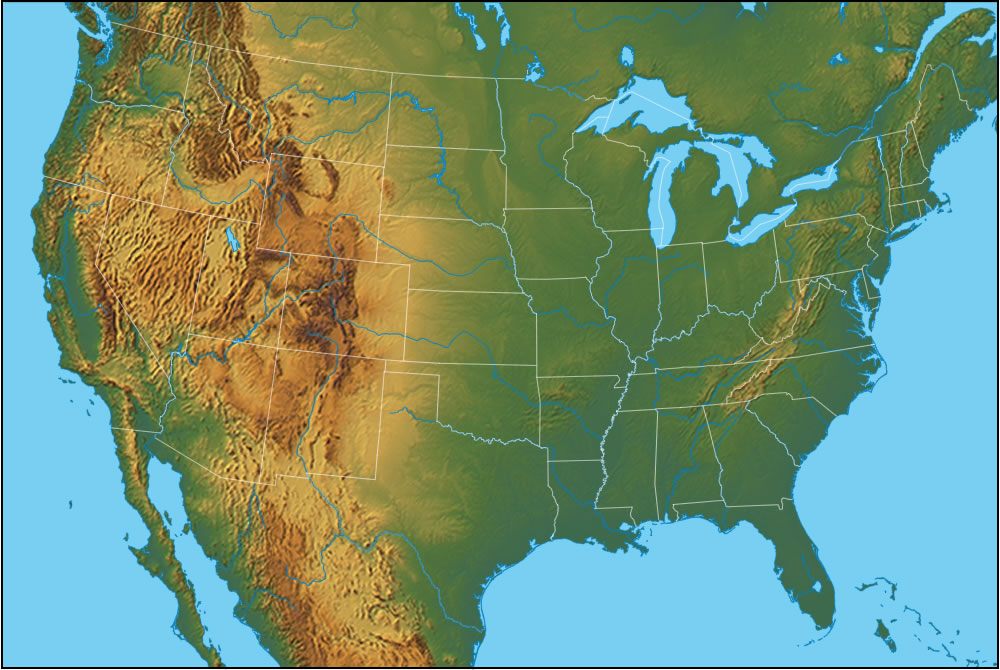
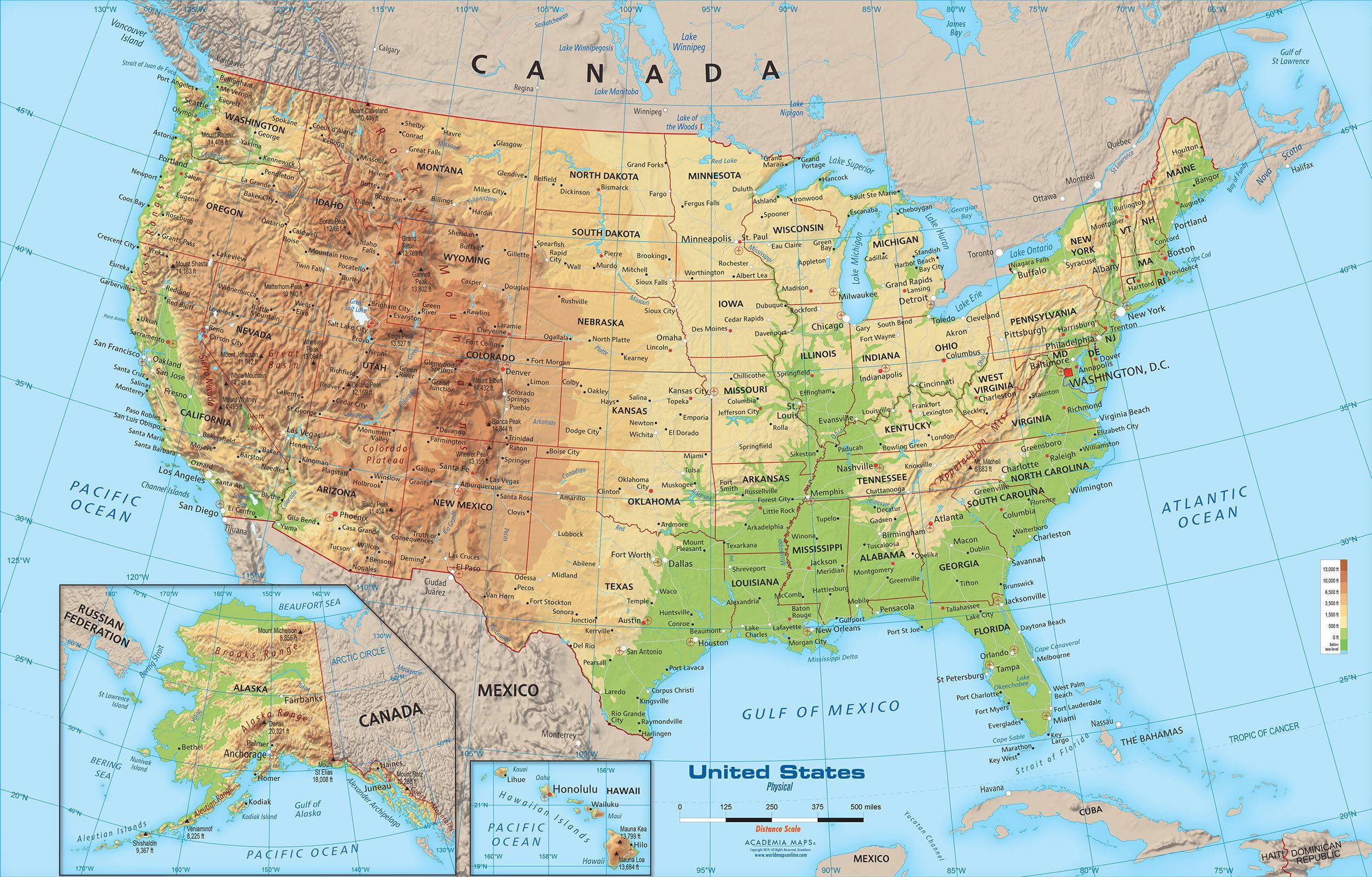
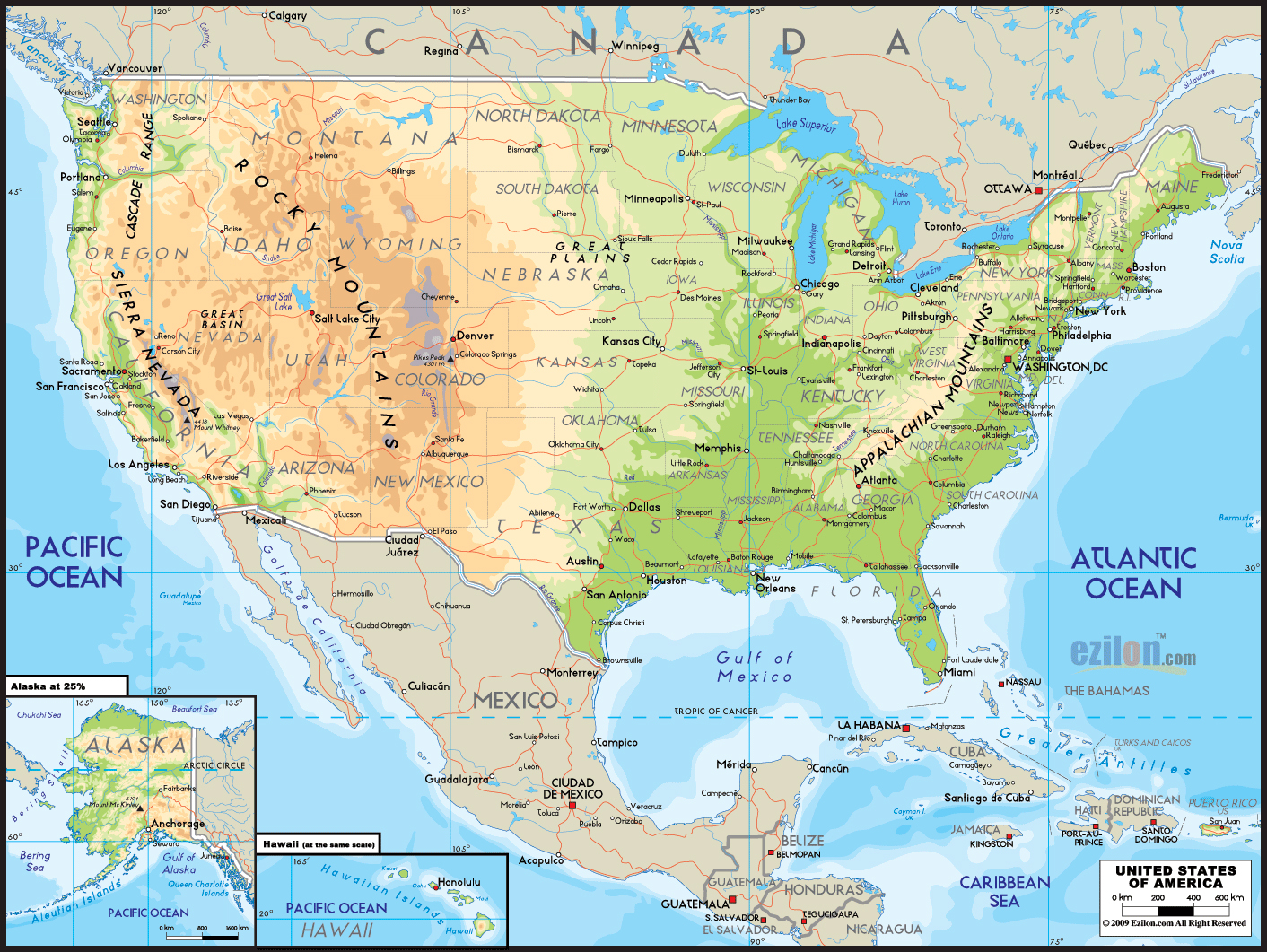
The United States, a nation renowned for its cultural diversity and economic prowess, is also a land of unparalleled physical grandeur. From the towering peaks of the Rocky Mountains to the sun-drenched shores of the Pacific Coast, its geographical diversity is a defining characteristic, shaping its history, economy, and the lives of its inhabitants. Understanding the physical features of the United States is crucial to comprehending its complex narrative and appreciating its breathtaking beauty.
This article will delve into the major physical features that define the United States, exploring their formation, characteristics, and significance. We will traverse the mountain ranges, navigate the vast plains, explore the intricate river systems, and appreciate the varied coastal landscapes that make up this remarkable nation.
The Eastern Highlands: A Legacy of Ancient Mountains
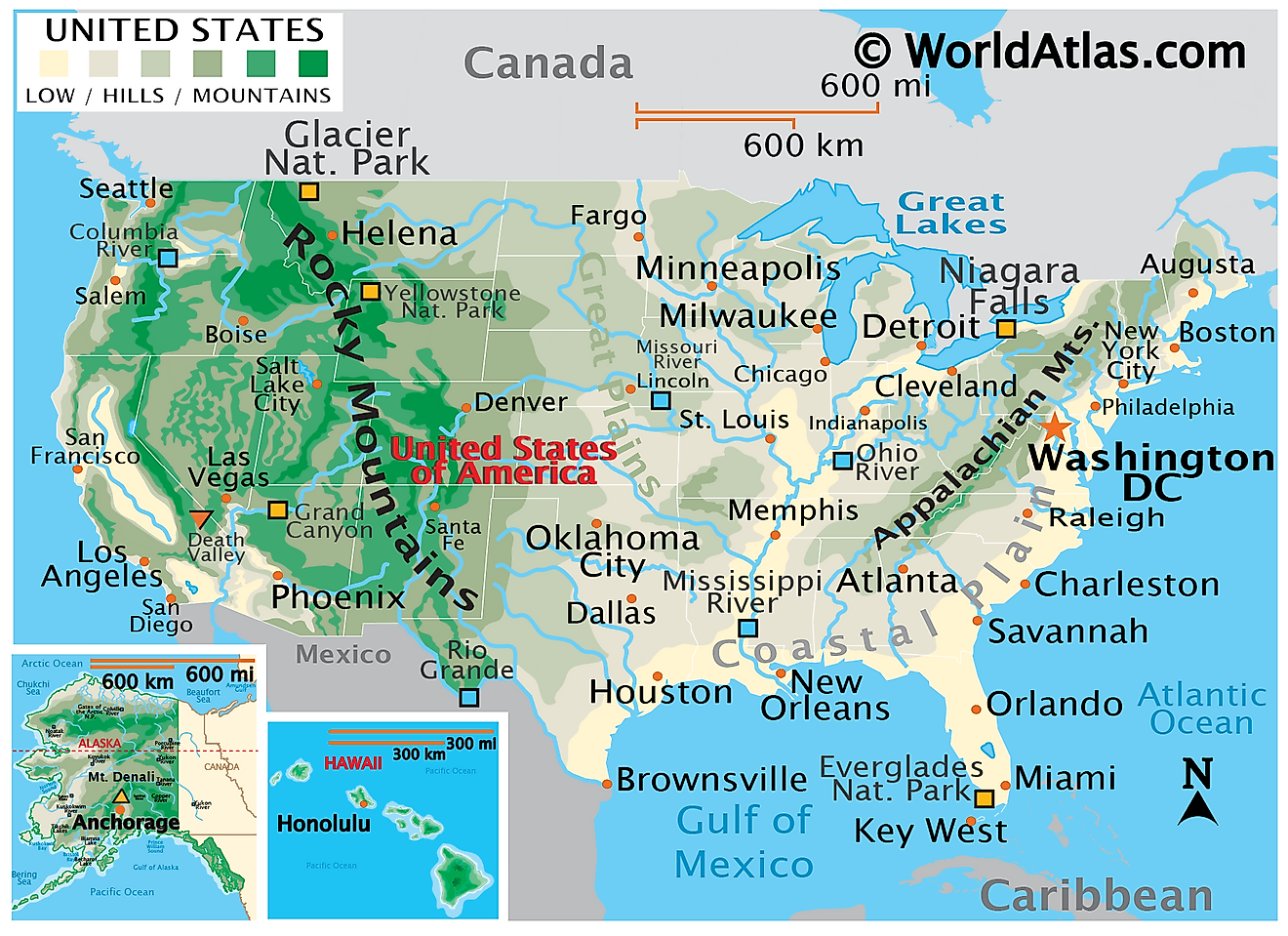
The eastern portion of the United States is dominated by the Appalachian Mountains, a vast range stretching from Newfoundland, Canada, to central Alabama. Unlike the younger, jagged peaks of the Rockies, the Appalachians are ancient, worn down by millions of years of erosion. Their rounded summits and gentle slopes tell a story of immense geological time.
The Appalachian Mountains were formed during the Paleozoic Era, hundreds of millions of years ago, through a series of orogenic events – mountain-building processes involving tectonic plate collisions. The collision of ancient continents resulted in folding and faulting of the Earth’s crust, creating a massive mountain range. Over eons, weathering and erosion sculpted these mountains into the landscape we see today.
Key features within the Appalachian system include:
- The Blue Ridge Mountains: Known for their distinctive bluish haze, caused by the emission of volatile organic compounds from the abundant forests. They are home to iconic landmarks like the Great Smoky Mountains National Park.
- The Allegheny Mountains: Characterized by their rugged terrain and rich coal deposits. They have played a crucial role in the industrial development of the region.
- The White Mountains: Located in New Hampshire and Maine, known for their dramatic peaks, including Mount Washington, notorious for its extreme weather conditions.
East of the Appalachians lies the Atlantic Coastal Plain, a broad, low-lying area gradually sloping towards the Atlantic Ocean. This plain is composed of sediments deposited over millions of years, creating fertile agricultural land and providing valuable resources like petroleum and natural gas.
The Interior Plains: America’s Breadbasket
West of the Appalachian Mountains lies the vast expanse of the Interior Plains, often referred to as America’s heartland. This region is characterized by its relatively flat topography, fertile soils, and abundant waterways, making it a vital agricultural area.
The Interior Plains were formed by the erosion of the Appalachian and Rocky Mountains, with sediments deposited by rivers and glaciers over millions of years. Glacial activity during the Pleistocene Epoch (Ice Age) played a significant role in shaping the landscape, carving out lakes, depositing fertile loess soils, and creating the Great Lakes.
Key features of the Interior Plains include:
- The Great Plains: A vast, treeless grassland stretching from the foothills of the Rocky Mountains to the Mississippi River. This region is renowned for its cattle ranching and wheat farming.
- The Central Lowland: An area of rolling hills and fertile valleys, located east of the Great Plains. This region is characterized by intensive agriculture, particularly corn and soybean production.
- The Great Lakes: A series of interconnected freshwater lakes – Superior, Michigan, Huron, Erie, and Ontario – formed by glacial activity. These lakes are a vital source of freshwater, transportation, and recreation.
The Mississippi River, the largest river system in North America, flows through the Interior Plains, draining a vast area between the Appalachian and Rocky Mountains. This river has been a crucial transportation artery for centuries, facilitating trade and connecting different regions of the country.
The Rocky Mountains: Majestic Peaks and Dramatic Landscapes
The western portion of the United States is dominated by the Rocky Mountains, a massive mountain range stretching from Alaska to New Mexico. Unlike the older, worn-down Appalachians, the Rockies are relatively young, characterized by their jagged peaks, steep slopes, and dramatic landscapes.
The Rocky Mountains were formed during the Laramide Orogeny, a period of intense mountain-building activity that occurred during the late Cretaceous and early Paleogene periods, approximately 80 to 55 million years ago. This orogeny involved the uplift and deformation of the Earth’s crust, creating a complex system of mountain ranges, plateaus, and valleys.
Key features within the Rocky Mountain system include:
- The Continental Divide: An imaginary line that separates the watersheds of the Pacific and Atlantic Oceans. Rivers east of the divide flow towards the Atlantic, while rivers west of the divide flow towards the Pacific.
- The Colorado Plateau: A vast, elevated region characterized by its colorful canyons, mesas, and buttes. This region is home to iconic landmarks like the Grand Canyon, Bryce Canyon, and Zion National Park.
- The Yellowstone National Park: A geothermal wonderland located in Wyoming, Montana, and Idaho. This park is renowned for its geysers, hot springs, and abundant wildlife.
The Rocky Mountains play a crucial role in regulating the climate of the western United States, influencing precipitation patterns and creating distinct microclimates. They are also a vital source of water, providing snowmelt that feeds many of the region’s rivers and streams.
The Pacific Coast: A Land of Earthquakes and Volcanic Activity
The westernmost edge of the United States is defined by the Pacific Coast, a dynamic and geologically active region characterized by its rugged coastline, towering mountains, and frequent earthquakes and volcanic eruptions.
The Pacific Coast is located along the Pacific Ring of Fire, a zone of intense seismic and volcanic activity caused by the interaction of tectonic plates. The subduction of the Pacific Plate beneath the North American Plate has resulted in the formation of mountain ranges, volcanic arcs, and deep-sea trenches.
Key features of the Pacific Coast include:
- The Cascade Range: A volcanic mountain range stretching from British Columbia, Canada, to northern California. This range is home to several active volcanoes, including Mount St. Helens and Mount Rainier.
- The Sierra Nevada: A massive mountain range located in California, known for its towering granite peaks, including Mount Whitney, the highest peak in the contiguous United States.
- The San Andreas Fault: A major fault line that runs through California, responsible for many of the state’s earthquakes.
The Pacific Coast is also characterized by its diverse ecosystems, ranging from temperate rainforests in the north to chaparral shrublands in the south. The region is home to a variety of unique plant and animal species, including the giant sequoia trees of California.
Beyond the Contiguous States: Alaska and Hawaii
The physical landscape of the United States extends beyond the contiguous 48 states to include Alaska and Hawaii, two regions with distinct geographical characteristics.
Alaska, the largest state in the United States, is a land of immense scale and rugged beauty. It is home to the towering peaks of the Alaska Range, including Denali (Mount McKinley), the highest peak in North America. Alaska also features vast tundra plains, numerous glaciers, and a long, rugged coastline.
Hawaii, a chain of volcanic islands located in the Pacific Ocean, is a tropical paradise characterized by its active volcanoes, lush rainforests, and pristine beaches. The islands were formed by volcanic activity over a hotspot in the Earth’s mantle.
Conclusion: A Nation Shaped by its Geography
The physical features of the United States have played a crucial role in shaping its history, economy, and culture. The fertile plains of the Midwest have supported agriculture, the rivers have facilitated transportation, and the mountains have provided resources and recreation. Understanding the geographical diversity of the United States is essential to appreciating its complex narrative and recognizing the profound impact of its land on its people. From the ancient peaks of the Appalachians to the active volcanoes of Hawaii, the United States is a land of extremes, a testament to the power and beauty of the natural world. The varied landscapes continue to influence settlement patterns, economic activities, and the very identity of the nation.