By admin
The United States, a nation spanning vast landscapes and diverse climates, presents a unique challenge for weather forecasting. From the humid subtropics of Florida to the frigid Arctic conditions of Alaska, understanding the dynamic interplay of atmospheric forces is crucial for daily life, travel planning, and disaster preparedness. A cornerstone of this understanding lies in the ubiquitous US weather forecast map, a visual representation of complex data that, when deciphered, can unlock valuable insights into the coming conditions.
This article will serve as a comprehensive guide to understanding US weather forecast maps, covering the essential elements, interpreting different types of maps, and highlighting the tools and resources available to stay informed.
The Anatomy of a US Weather Forecast Map: Key Elements to Recognize
Before diving into specific map types, let’s establish a foundation by identifying the core components common to most US weather forecast maps:
-
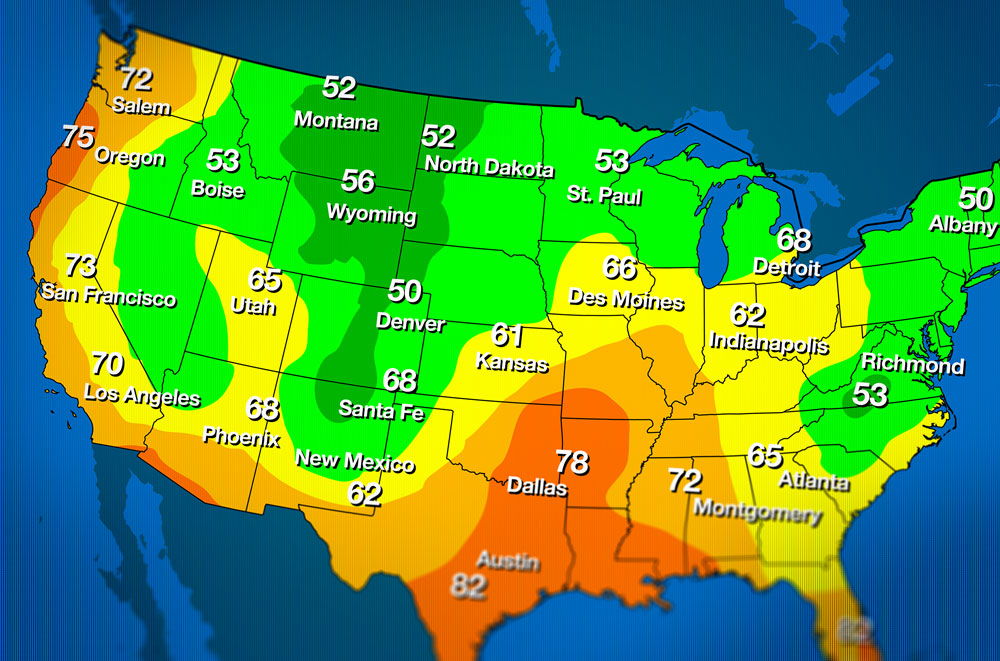
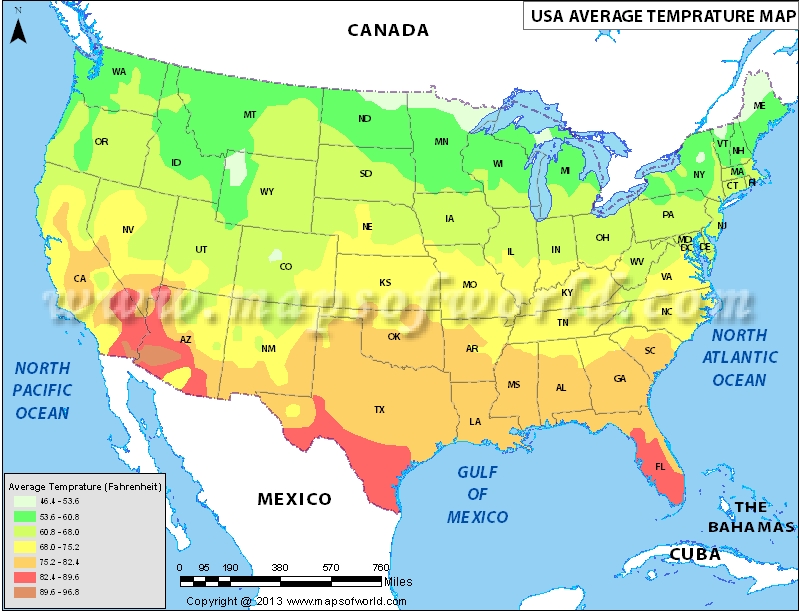
Temperature: Represented through color gradients, temperature is arguably the most immediately recognizable element. Warmer colors (red, orange, yellow) typically indicate higher temperatures, while cooler colors (blue, green, purple) represent lower temperatures. Maps often show both current temperatures and projected high and low temperatures for a specific time period. The color scale is usually included as a legend on the map.
-
Precipitation: This refers to any form of water falling from the sky, including rain, snow, sleet, and hail. Precipitation is often depicted with different colors representing the type and intensity. For example, rain might be shown in shades of blue or green, while snow is typically represented by shades of white or gray. Intensity is often indicated by the saturation of the color or by using different symbols (e.g., heavier rainfall might be shown with thicker lines or more densely packed symbols).
-
Wind: Wind direction and speed are usually indicated by wind barbs, which are small symbols that point in the direction the wind is blowing from. The length and number of flags or feathers on the barb indicate the wind speed. A full barb represents 10 knots (approximately 11.5 mph), a half barb represents 5 knots, and a pennant (a triangle) represents 50 knots. Wind speed can also be represented using color gradients, with stronger winds often shown in brighter colors.
-
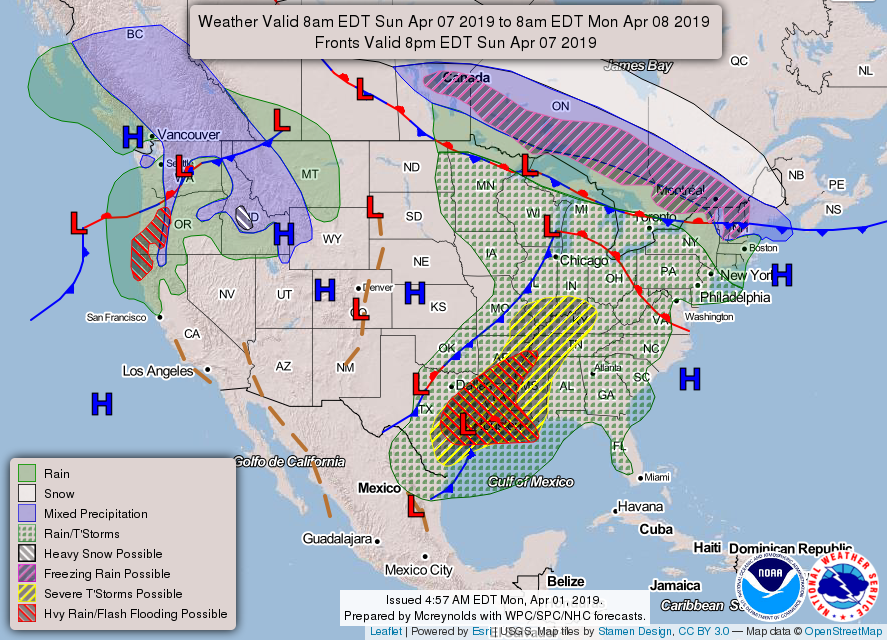
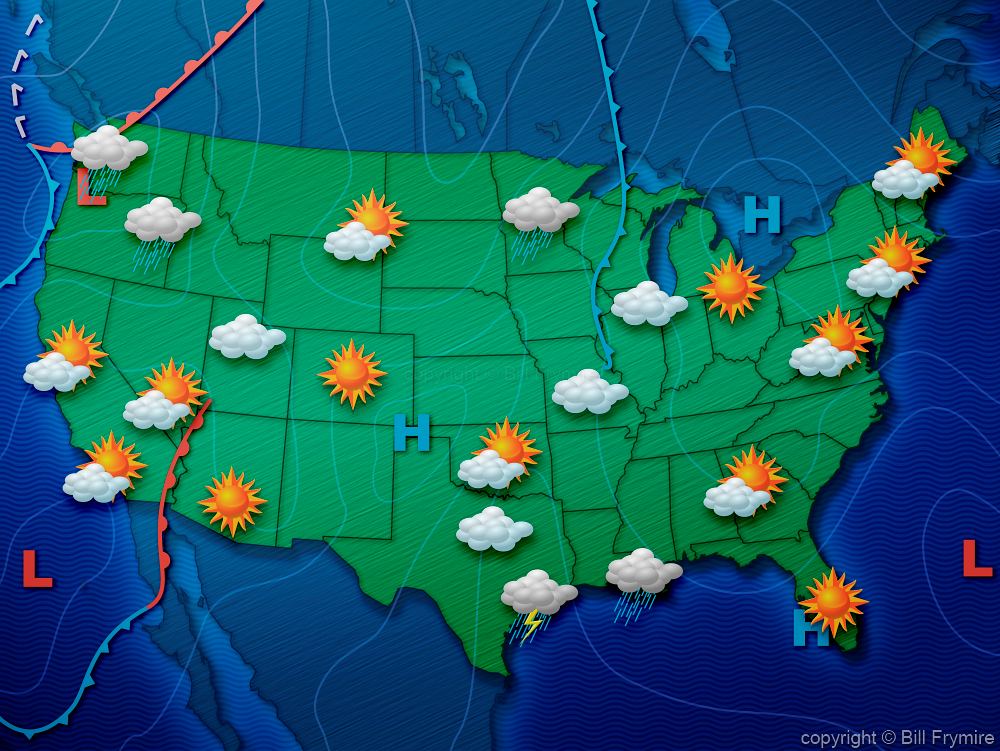
Pressure Systems: High-pressure systems (indicated by a capital "H") are generally associated with clear skies and stable weather conditions, as air is sinking within the system. Low-pressure systems (indicated by a capital "L") are typically associated with unsettled weather, including clouds, precipitation, and potentially strong winds, as air is rising within the system. Isobars, lines connecting points of equal atmospheric pressure, often encircle these systems. The closer the isobars are to each other, the stronger the pressure gradient and the higher the potential for strong winds.
-
Fronts: Fronts represent the boundaries between different air masses. There are four main types of fronts, each with its own symbol:
- Cold Front: Marked by blue triangles pointing in the direction the front is moving, cold fronts typically bring a drop in temperature and potentially strong storms followed by clearing skies.
- Warm Front: Marked by red semicircles pointing in the direction the front is moving, warm fronts usually bring a gradual increase in temperature and humidity, often accompanied by prolonged periods of rain or drizzle.
- Stationary Front: Marked by alternating blue triangles and red semicircles, stationary fronts represent a boundary between air masses that are not moving significantly. They can bring prolonged periods of unsettled weather, including rain and flooding.
- Occluded Front: Marked by alternating purple triangles and semicircles on the same side, occluded fronts occur when a cold front overtakes a warm front, often leading to complex weather patterns.
-
Radar: Radar maps display the location and intensity of precipitation. They use different colors to represent the strength of the radar signal reflected back from rain, snow, or hail. Green typically indicates light precipitation, while red and purple indicate heavy precipitation. Radar maps are essential for tracking the movement of storms and predicting short-term precipitation patterns.
-
Satellite Imagery: Satellite imagery provides a visual representation of clouds, weather systems, and other atmospheric features. Visible satellite imagery shows the Earth’s surface as it would appear to the human eye, while infrared satellite imagery detects the temperature of clouds and the Earth’s surface, allowing meteorologists to see weather systems even at night.
Types of US Weather Forecast Maps and Their Uses
Understanding the different types of weather maps is crucial for interpreting the information they convey. Here are some common types of maps and their specific applications:
-
Surface Analysis Maps: These maps provide a snapshot of current weather conditions across the US. They show temperature, pressure systems, fronts, wind direction and speed, and other relevant data. Surface analysis maps are valuable for understanding the current weather situation and for identifying potential hazards.
-
Upper-Air Maps: These maps show weather conditions at different altitudes in the atmosphere. They are essential for understanding the overall atmospheric circulation and for predicting the development and movement of weather systems. Upper-air maps typically show wind speed and direction, temperature, and humidity at specific pressure levels.
-
Forecast Maps: These maps predict future weather conditions. They are based on computer models that simulate the behavior of the atmosphere. Forecast maps can show a variety of parameters, including temperature, precipitation, wind, and cloud cover. They are available for different time periods, ranging from short-term (e.g., hourly) to long-term (e.g., 7-day).
-
Severe Weather Outlook Maps: These maps highlight areas where severe weather, such as thunderstorms, tornadoes, and hail, is possible. They are issued by the Storm Prediction Center (SPC) and provide valuable information for preparing for potentially dangerous weather conditions. These maps typically include different risk categories, ranging from marginal to high.
-
Temperature and Precipitation Outlooks: These maps provide a long-range forecast of temperature and precipitation, typically for a period of weeks or months. They are based on statistical models and are useful for planning activities that are sensitive to weather conditions, such as agriculture and water management.
-
Fire Weather Outlooks: These maps highlight areas where conditions are favorable for wildfires. They consider factors such as temperature, humidity, wind speed, and fuel moisture. Fire weather outlooks are essential for wildfire prevention and management.
Tools and Resources for Accessing US Weather Forecast Maps
Numerous resources are available to access US weather forecast maps, ranging from government agencies to private weather providers:
- National Weather Service (NWS): The NWS is the primary source of weather information for the US. Their website (weather.gov) provides access to a wide range of weather maps, forecasts, and warnings.
- Storm Prediction Center (SPC): The SPC is responsible for forecasting severe weather across the US. Their website (spc.noaa.gov) provides access to severe weather outlook maps, reports, and other information.
- Aviation Weather Center (AWC): The AWC provides weather information for pilots and other aviation professionals. Their website (aviationweather.gov) provides access to aviation weather maps, forecasts, and warnings.
- Private Weather Providers: Many private companies, such as The Weather Channel, AccuWeather, and Weather Underground, provide weather maps and forecasts through their websites and mobile apps.
- Mobile Apps: Numerous mobile apps provide access to weather maps and forecasts. These apps often offer customized alerts and other features.
Tips for Interpreting US Weather Forecast Maps
Interpreting weather maps effectively requires practice and attention to detail. Here are some tips to help you get the most out of these valuable tools:
- Pay attention to the map legend: The legend explains the symbols, colors, and other conventions used on the map.
- Consider the time period: Make sure you understand the time period covered by the map. Is it a current analysis or a forecast for the future?
- Look for patterns: Identify pressure systems, fronts, and other weather features. How are they moving? What impact are they likely to have on the weather?
- Compare different maps: Compare surface analysis maps, upper-air maps, and forecast maps to get a comprehensive understanding of the weather situation.
- Stay updated: Weather conditions can change rapidly. Check the forecast regularly to stay informed.
- Consult multiple sources: Don’t rely on a single source of information. Compare forecasts from different sources to get a more complete picture.
- Understand the limitations: Weather forecasts are not perfect. They are based on computer models that are subject to error. Be prepared for unexpected changes in the weather.
Conclusion
US weather forecast maps are powerful tools for understanding and predicting weather conditions. By learning the essential elements of these maps, interpreting different types of maps, and utilizing the available resources, you can gain valuable insights into the atmospheric processes that shape our environment. Whether you’re planning a weekend getaway, preparing for a severe weather event, or simply curious about the world around you, understanding weather forecast maps will empower you to make informed decisions and stay safe. The ability to decode the skies is a valuable skill in a nation as climatically diverse as the United States.