By admin
Georgia, a state renowned for its vibrant culture and southern charm, is also blessed with a diverse and stunning geography. Beyond the sprawling plains and historic cities lies a dramatic landscape dominated by the Appalachian Mountains. This article delves into the captivating world of Georgia’s mountains, exploring their diverse ranges, highlighting key peaks, and guiding you through the use of maps to navigate and appreciate their grandeur.
The Appalachian Backbone: Defining Georgia’s Mountainous Terrain
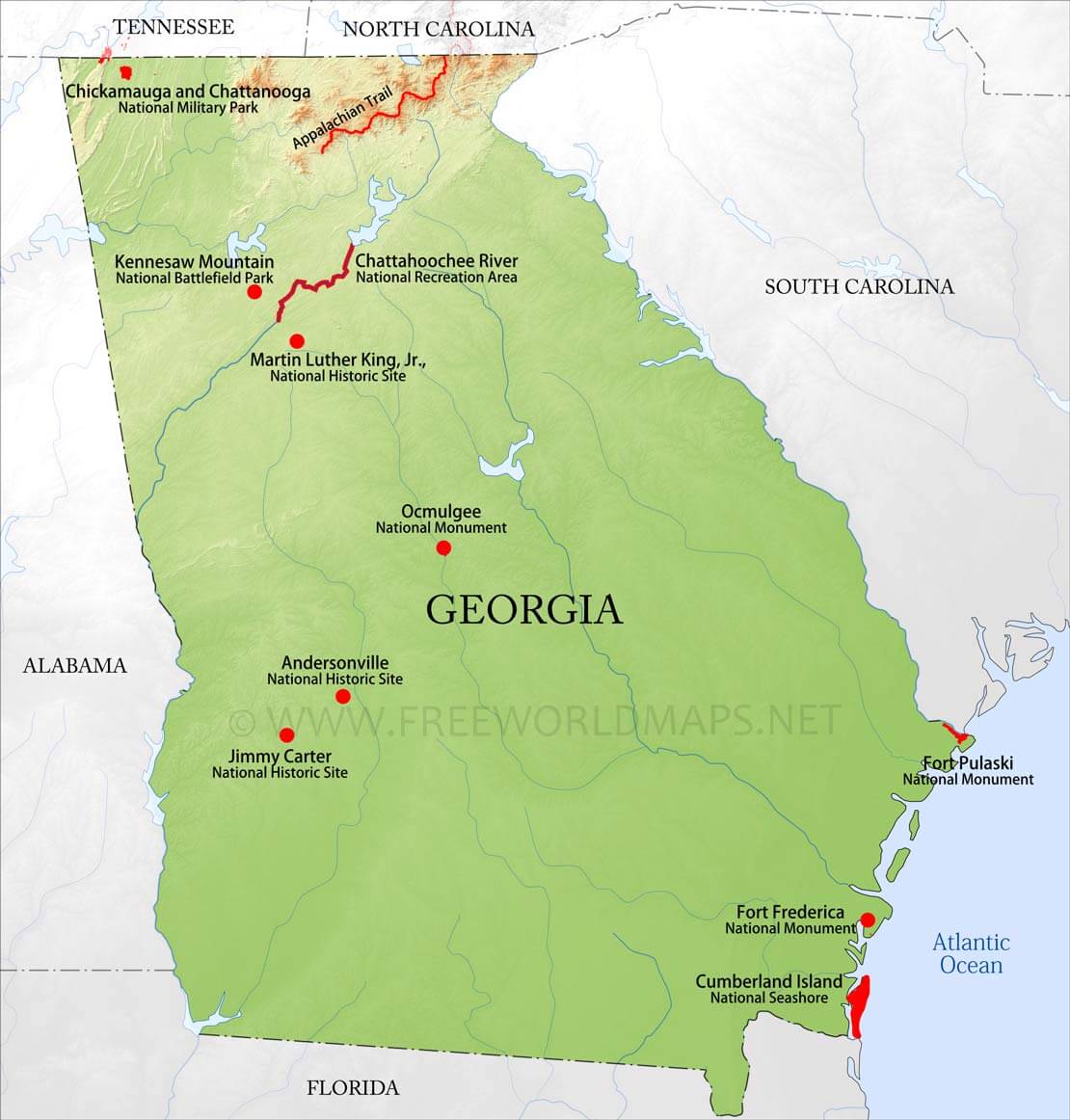
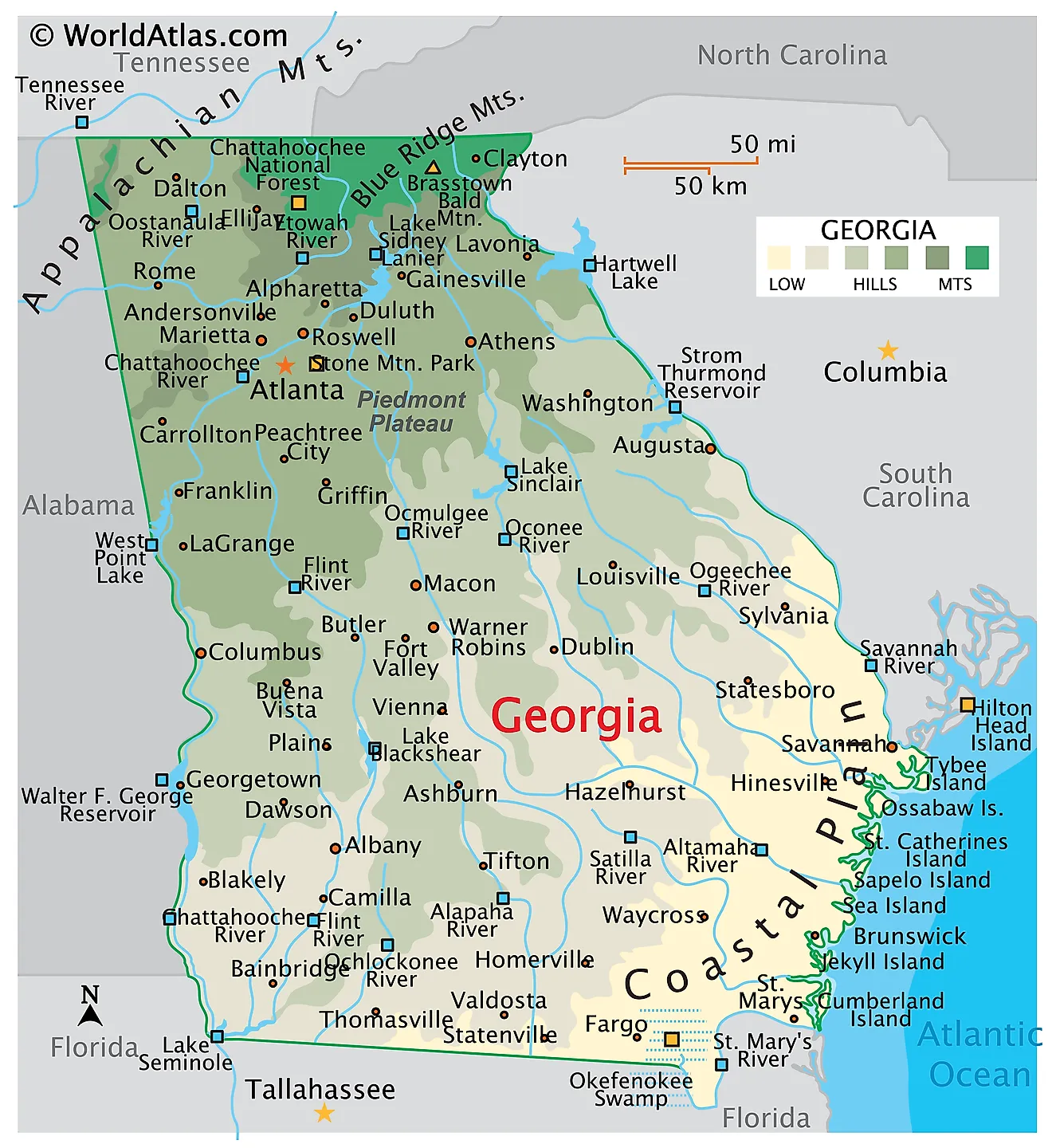
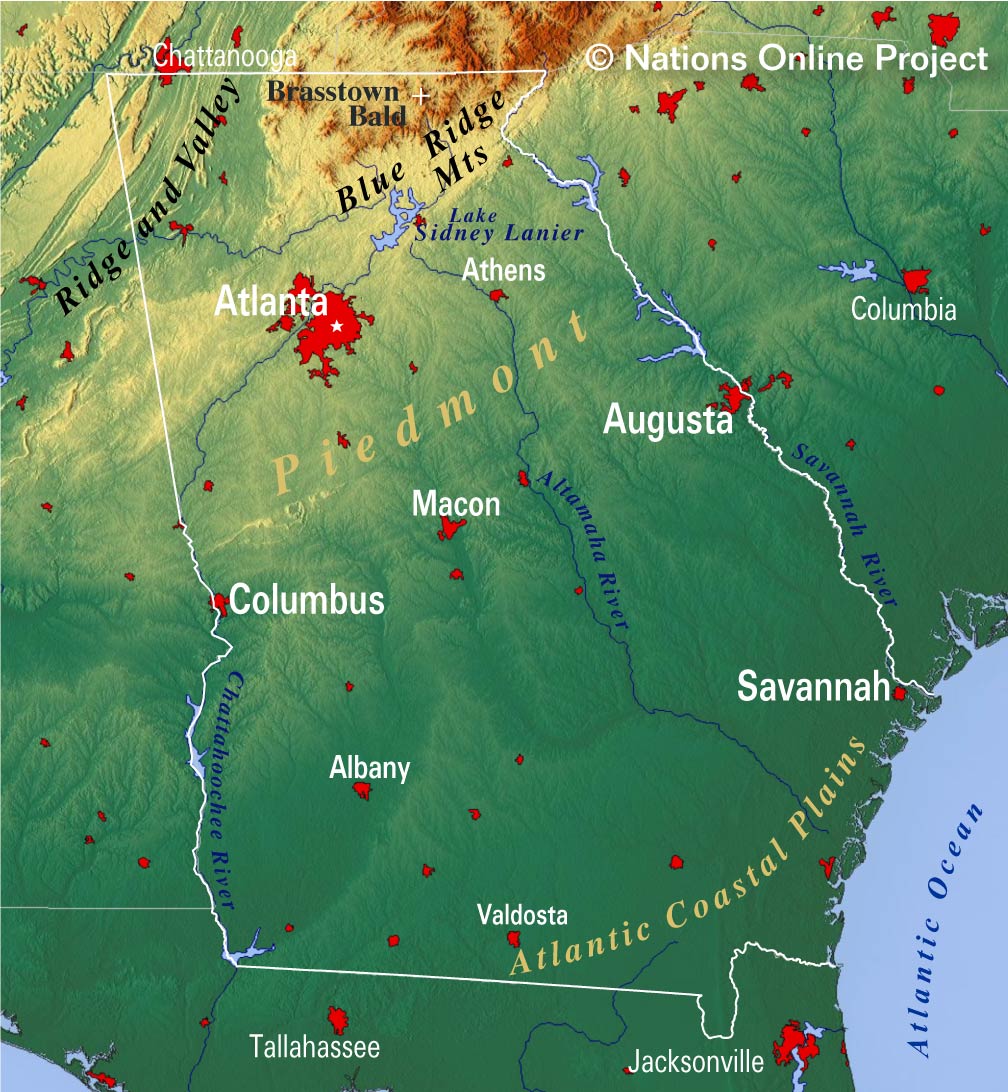
The defining feature of Georgia’s mountain landscape is the southern terminus of the Appalachian Mountain range. While the peaks here may not reach the towering heights of their northern counterparts, they possess a unique beauty and offer a rich tapestry of ecosystems. The Appalachian Mountains in Georgia are primarily divided into three main regions:
- The Blue Ridge Mountains: This is the most prominent and well-known mountain region in Georgia, forming the backbone of the state’s mountainous area. Characterized by rounded peaks, lush forests, and cascading waterfalls, the Blue Ridge Mountains offer a plethora of recreational opportunities, including hiking, camping, and scenic drives.
- The Ridge and Valley Province: Situated west of the Blue Ridge, this region is characterized by long, parallel ridges separated by fertile valleys. This distinctive topography is a result of folding and faulting over millions of years. The Ridge and Valley region offers a different perspective on Georgia’s mountains, with its panoramic views and unique geological formations.
- The Cumberland Plateau: Located in the northwestern corner of Georgia, the Cumberland Plateau is a high, flat-topped region dissected by deep canyons and valleys. This region boasts impressive rock formations, challenging hiking trails, and a more rugged, remote feel compared to the Blue Ridge.
Key Mountain Peaks in Georgia: Reaching for the Sky
While Georgia might not boast peaks exceeding 10,000 feet, it offers a variety of mountains that challenge hikers and reward visitors with breathtaking vistas. Here are some of the most notable mountains in Georgia:
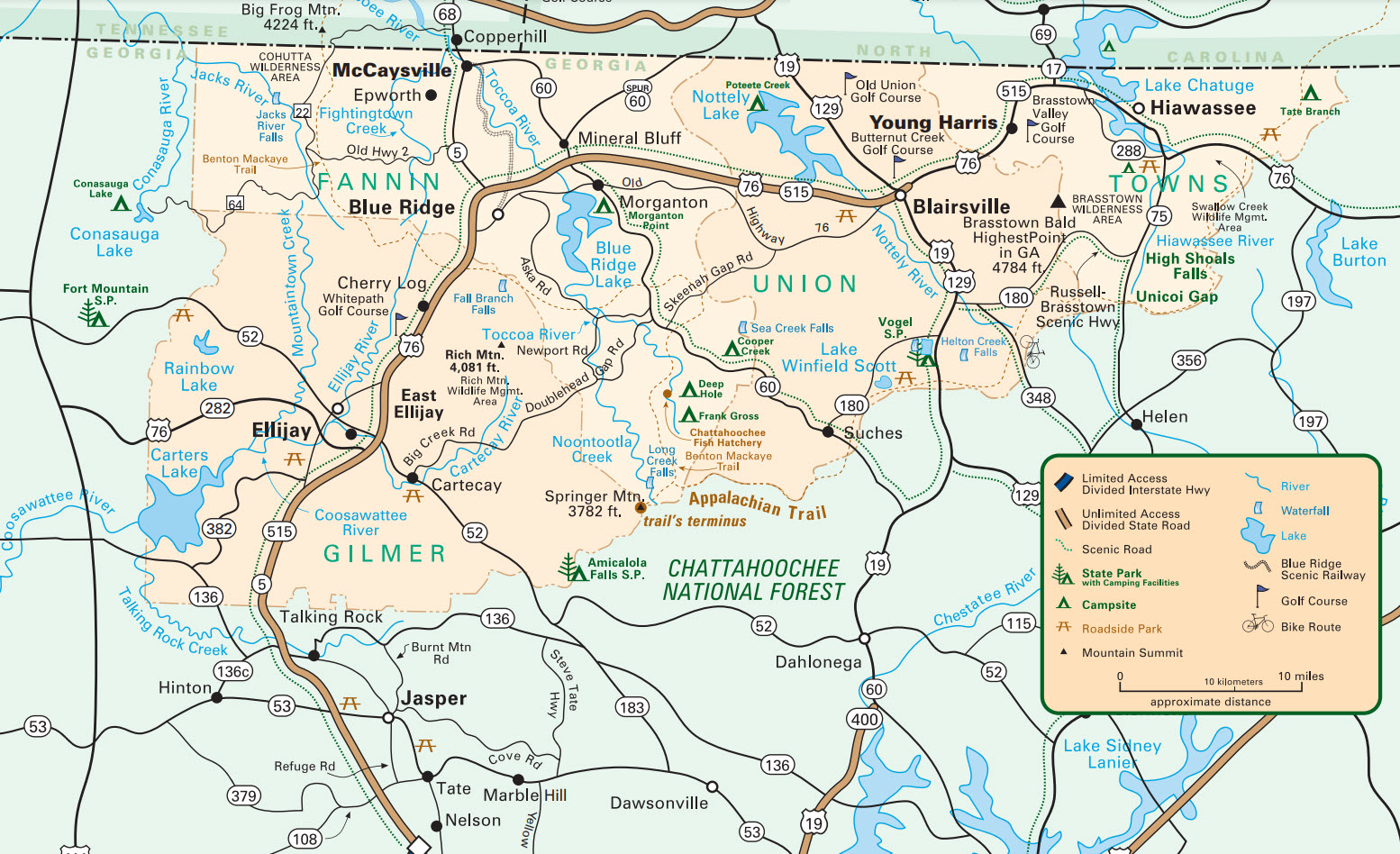
- Brasstown Bald (4,784 feet): As the highest point in Georgia, Brasstown Bald offers unparalleled 360-degree views of the surrounding landscape. On a clear day, you can see four states: Georgia, North Carolina, South Carolina, and Tennessee. The summit is accessible by a paved road and a short, paved trail, making it a popular destination for visitors of all abilities.
- Blood Mountain (4,458 feet): Steeped in Native American lore, Blood Mountain is a challenging hike that rewards adventurers with stunning views and a sense of accomplishment. The Appalachian Trail crosses the summit, making it a popular stop for thru-hikers.
- Rabun Bald (4,696 feet): Located near the North Carolina border, Rabun Bald is the second-highest peak in Georgia. It offers exceptional panoramic views and is home to a fire tower that provides even more expansive perspectives.
- Springer Mountain (3,782 feet): Perhaps best known as the southern terminus of the Appalachian Trail, Springer Mountain is a significant landmark for hikers. Reaching the summit marks the beginning or end of a monumental journey.
- Stone Mountain (1,686 feet): Although significantly lower in elevation than other peaks on this list, Stone Mountain is a notable landmark due to its sheer size and unique geological formation. This massive granite dome offers hiking trails, scenic views, and a rich history.
Navigating the Terrain: Utilizing Georgia Mountain Maps
Understanding and utilizing maps is crucial for exploring Georgia’s mountains safely and effectively. Different types of maps offer varying levels of detail and information, catering to diverse needs and activities.
- Topographic Maps (Topo Maps): These maps are essential for serious hikers and outdoor enthusiasts. Topo maps depict the three-dimensional shape of the land using contour lines, which connect points of equal elevation. By understanding contour lines, you can visualize the steepness of slopes, identify ridges and valleys, and plan your routes accordingly. They also typically show trails, roads, streams, and other important features. The U.S. Geological Survey (USGS) produces topographic maps that cover the entire state of Georgia. You can find these maps online or at many outdoor retailers.
- Trail Maps: Specific trail maps are invaluable for navigating established hiking trails. These maps often provide detailed information about trail distances, elevation profiles, water sources, campsites, and points of interest. Many hiking clubs and organizations publish trail maps for specific areas or trails.
- Road Maps: While primarily designed for vehicular travel, road maps can be helpful for accessing trailheads and scenic overlooks in the mountains. They show the major roads, highways, and smaller roads that lead to various mountain destinations.
- Digital Mapping Apps: In the digital age, a plethora of mapping apps are available for smartphones and tablets. These apps often utilize GPS technology to track your location in real-time and provide navigation assistance. Many apps also allow you to download maps for offline use, which is crucial in areas with limited or no cell service. Popular options include Gaia GPS, AllTrails, and Avenza Maps.
Essential Map Reading Skills for Mountain Exploration
Before venturing into the mountains, it’s essential to develop basic map reading skills. Here are a few key concepts to understand:
- Scale: The scale of a map indicates the relationship between distances on the map and corresponding distances on the ground. A larger scale map shows a smaller area with more detail, while a smaller scale map shows a larger area with less detail.
- Contour Lines: As mentioned earlier, contour lines connect points of equal elevation. Closely spaced contour lines indicate a steep slope, while widely spaced contour lines indicate a gentle slope.
- Legend: The legend of a map explains the symbols and colors used to represent different features, such as trails, roads, water bodies, and vegetation.
- Compass: A compass is an indispensable tool for navigating in the mountains. It allows you to determine direction and orient yourself on the map. Understanding how to use a compass in conjunction with a map is crucial for staying on course.
- Declination: Magnetic declination is the angle between true north (geographic north) and magnetic north (the direction a compass needle points). It’s important to account for declination when using a compass to navigate accurately.
Safety Considerations in the Georgia Mountains
Exploring the mountains of Georgia can be a rewarding experience, but it’s essential to prioritize safety. Here are a few important considerations:
- Weather: Mountain weather can be unpredictable and change rapidly. Check the forecast before heading out and be prepared for sudden changes in temperature, rain, or wind.
- Navigation: Never rely solely on electronic devices for navigation. Always carry a map and compass and know how to use them.
- Gear: Dress appropriately for the weather and terrain. Wear sturdy hiking boots, moisture-wicking clothing, and bring rain gear.
- Hydration and Nutrition: Carry plenty of water and snacks to stay hydrated and energized.
- Tell Someone Your Plans: Let someone know your hiking plans, including your route, estimated return time, and emergency contact information.
- Wildlife: Be aware of the potential for encountering wildlife, such as bears, snakes, and other animals. Store food properly and avoid approaching or feeding wildlife.
- Leave No Trace: Practice Leave No Trace principles to minimize your impact on the environment. Pack out everything you pack in, stay on designated trails, and respect wildlife.
Conclusion: Embracing the Beauty of Georgia’s Mountains
The mountains of Georgia offer a wealth of natural beauty, recreational opportunities, and historical significance. From the towering peaks of the Blue Ridge to the rugged terrain of the Cumberland Plateau, the state’s mountain landscape is a treasure to be explored and appreciated. By understanding the geography, utilizing maps effectively, and prioritizing safety, you can embark on unforgettable adventures and create lasting memories in the heart of Georgia’s mountains. So, grab your map, pack your gear, and prepare to discover the majesty that awaits!