By admin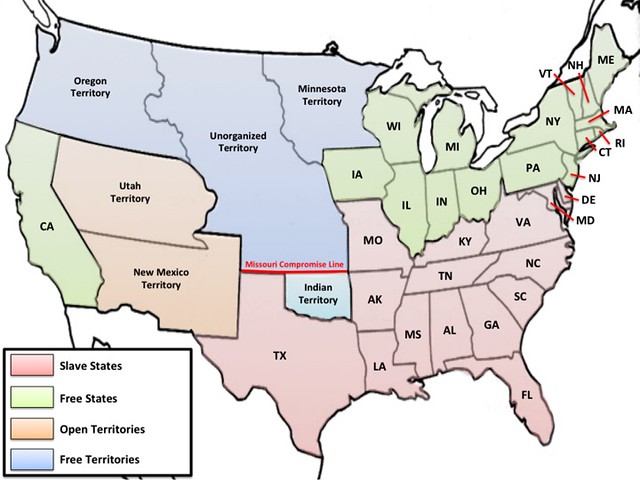
The year 1850 stands as a pivotal moment in American history, a year when the nation teetered precariously on the brink of civil war. At the heart of the crisis lay the escalating tensions surrounding slavery, a moral, economic, and political fault line that threatened to cleave the nation in two. To avert disaster, Congress crafted a series of measures collectively known as the Compromise of 1850. While often discussed in terms of its individual components, the "1850 Compromise Map," a conceptual representation of the territorial adjustments and legislative agreements reached, provides a powerful visual aid for understanding the complexity and fragility of this attempted resolution. This article will explore the key elements of the 1850 Compromise, its cartographic implications, and its ultimate failure to provide a lasting solution to the slavery question.
The Legacy of Manifest Destiny: Territorial Expansion and the Slavery Question
The 1840s witnessed a surge of American expansionism fueled by the doctrine of Manifest Destiny. The belief that the United States was divinely ordained to control the North American continent led to the annexation of Texas in 1845 and the Mexican-American War (1846-1848). Victory in that war resulted in the acquisition of vast new territories, including California, Nevada, Utah, and parts of Arizona, New Mexico, Colorado, and Wyoming.
This territorial windfall, however, became a poisoned chalice. The question of whether these new territories would be admitted to the Union as free or slave states ignited fierce debate. The South, deeply invested in the institution of slavery, sought to extend its reach westward, arguing that Congress had no right to prohibit slavery in the territories. The North, increasingly influenced by abolitionist sentiment, vehemently opposed the expansion of slavery, fearing its economic and moral consequences.
The existing balance between free and slave states in the Senate was a critical factor in maintaining political stability. The addition of new states on either side threatened to disrupt this delicate equilibrium and give one faction a decisive advantage. The Wilmot Proviso, proposed in 1846, which sought to ban slavery in any territory acquired from Mexico, further inflamed sectional tensions, although it ultimately failed to pass.
The Crisis of 1850: A Nation Divided
By 1850, the situation had reached a critical point. California, having experienced a rapid population boom during the Gold Rush, applied for admission to the Union as a free state. This move threatened to upset the balance in the Senate and infuriated the South. Meanwhile, the issue of slavery in the remaining territories acquired from Mexico remained unresolved, and the Fugitive Slave Act, designed to ensure the return of escaped slaves to their owners, was proving increasingly controversial and ineffective.
The South, facing perceived threats to its way of life and economic interests, began to openly discuss secession. The specter of a divided nation loomed large, prompting desperate attempts at compromise.
The Architects of Compromise: Clay, Webster, and Douglas
In this atmosphere of crisis, three prominent senators stepped forward to broker a solution: Henry Clay of Kentucky, Daniel Webster of Massachusetts, and Stephen Douglas of Illinois. Clay, known as the "Great Compromiser" for his role in resolving previous sectional disputes, spearheaded the initial effort. He proposed a series of measures designed to address the concerns of both the North and the South.
Webster, a staunch Unionist, delivered a powerful speech in support of Clay’s proposals, urging his fellow senators to prioritize national unity over sectional interests. While his support alienated many of his abolitionist constituents in the North, it lent crucial legitimacy to the compromise effort.
However, Clay’s initial proposals faced considerable opposition. It was Douglas, a rising star in the Democratic Party, who skillfully navigated the complex political landscape and ultimately steered the compromise through Congress. He broke down Clay’s omnibus bill into individual measures, allowing senators to vote on each issue separately and garnering the necessary support for passage.
The Components of the Compromise: A Patchwork Solution
The Compromise of 1850 consisted of five key provisions, each addressing a specific aspect of the slavery question:
-
Admission of California as a Free State: This addressed the immediate crisis by admitting California to the Union as a free state, tipping the balance in the Senate in favor of the North.
-
Organization of the Territories of New Mexico and Utah: The territories of New Mexico and Utah were organized without any explicit mention of slavery. The issue would be decided by popular sovereignty, allowing the residents of each territory to determine whether to allow slavery or not.
-
Resolution of the Texas-New Mexico Boundary Dispute: Texas relinquished its claims to a large portion of territory in present-day New Mexico in exchange for $10 million to pay off its debts. This resolved a contentious border dispute that had threatened to escalate tensions between the two states.
-
Abolition of the Slave Trade in the District of Columbia: The slave trade, but not slavery itself, was abolished in the District of Columbia. This was a symbolic victory for abolitionists, but it had little practical impact on the institution of slavery in the South.
-
The Fugitive Slave Act: This was the most controversial aspect of the compromise. It strengthened the existing Fugitive Slave Act, requiring federal officials to assist in the capture and return of runaway slaves. It also denied accused runaways the right to a jury trial and imposed harsh penalties on those who aided escaped slaves.
The 1850 Compromise Map: A Cartographic Representation of Political Division
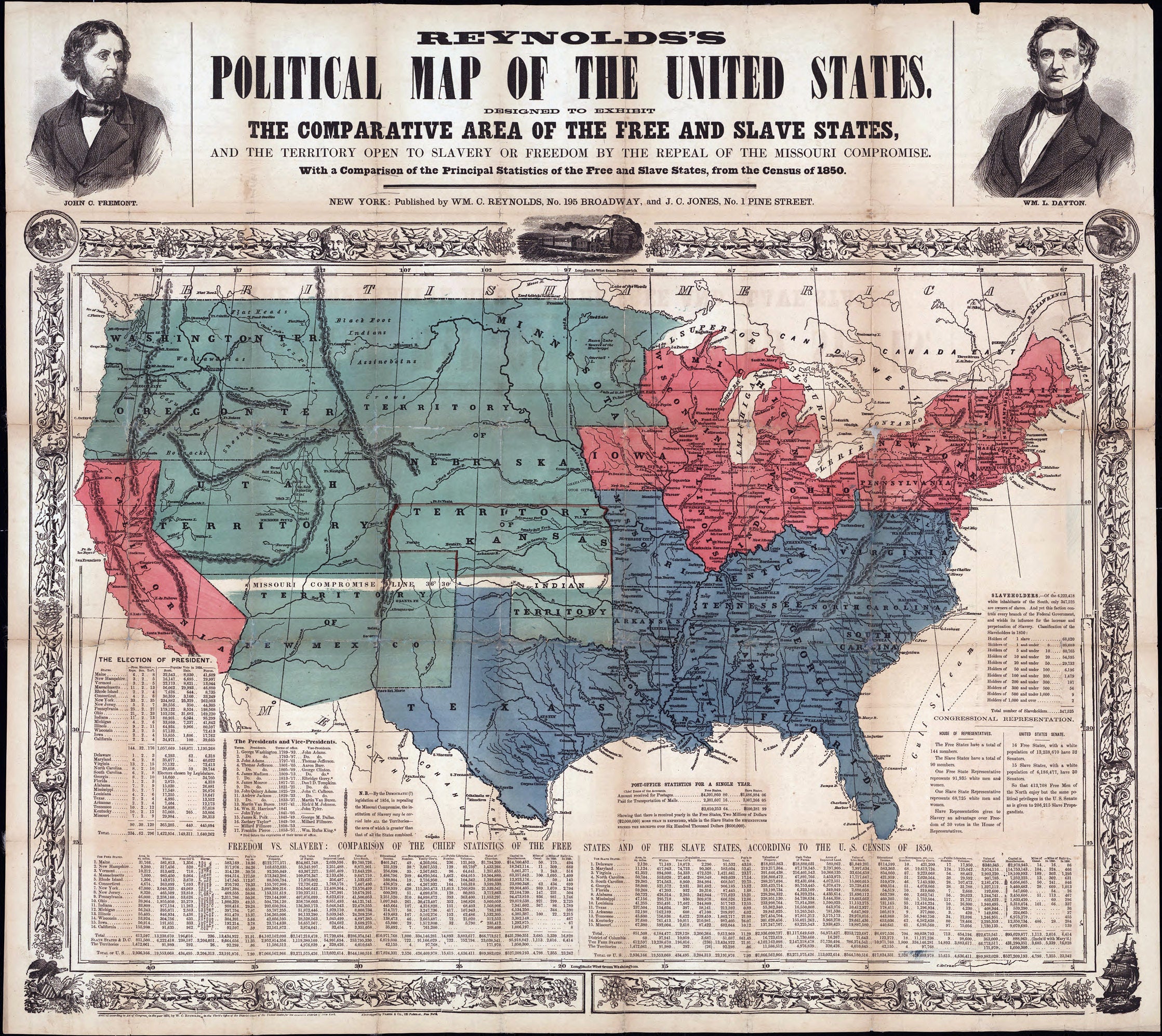
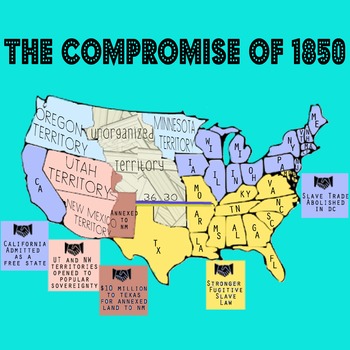
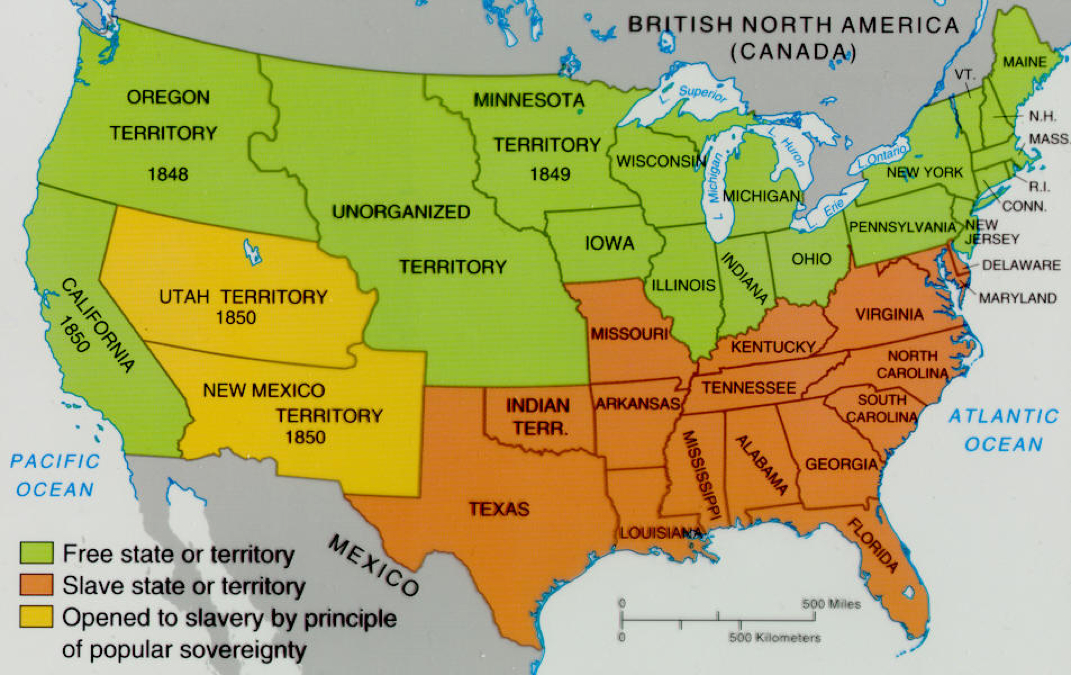
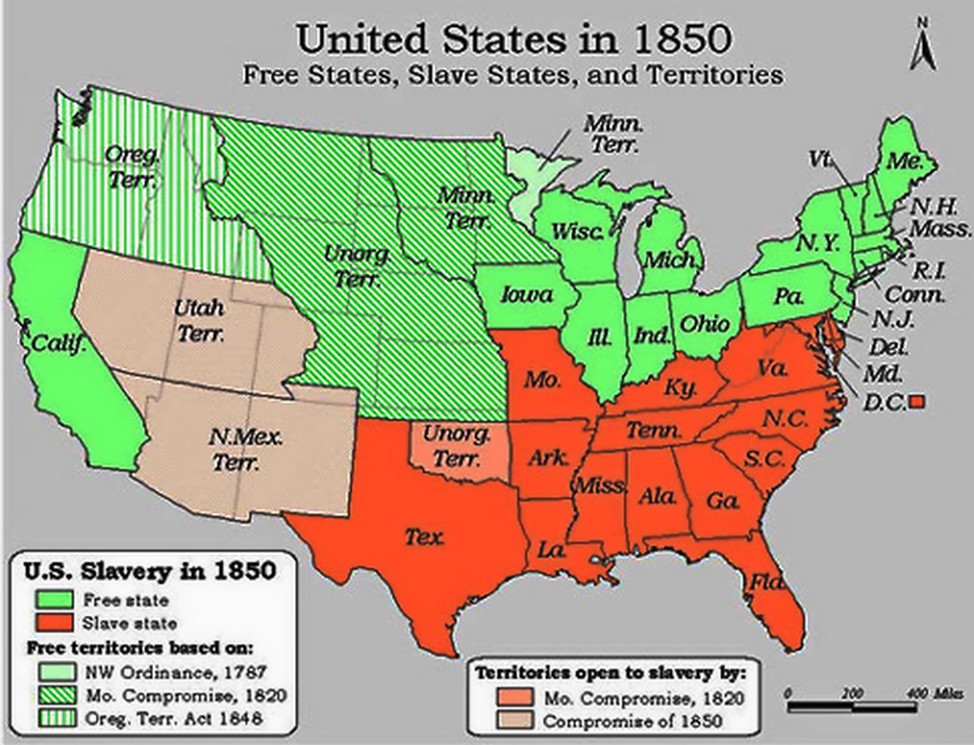
While no single official map was designated as the "1850 Compromise Map," visualizing the territorial changes and legislative agreements on a map provides a clear understanding of the compromise’s impact and its inherent contradictions.
- California: Clearly delineated as a free state, contrasting with the territories to the east.
- New Mexico and Utah: Shaded or colored differently to denote their territorial status and the application of popular sovereignty. The ambiguity surrounding their future status is visually represented.
- Texas: Its revised boundaries are clearly marked, reflecting the loss of territory to New Mexico.
- The District of Columbia: While not geographically distinct, a marker could indicate the abolition of the slave trade within its borders.
Such a map highlights the inherent tensions within the compromise. The admission of California as a free state, while welcomed in the North, was a significant concession from the South. The principle of popular sovereignty, while seemingly democratic, was fraught with potential for violence and manipulation, as later events in Kansas would demonstrate. The Fugitive Slave Act, a concession to the South, was deeply resented in the North and further fueled abolitionist sentiment.
The Illusion of Peace: Short-Term Success and Long-Term Failure
Initially, the Compromise of 1850 appeared to have averted the crisis. Celebrations erupted across the nation, and many believed that the slavery question had been resolved. However, the peace proved to be short-lived.
The Fugitive Slave Act, in particular, proved to be a major point of contention. Its enforcement sparked outrage in the North, leading to increased resistance and the formation of abolitionist societies dedicated to aiding runaway slaves. The novel "Uncle Tom’s Cabin," published in 1852, further inflamed public opinion against slavery and the Fugitive Slave Act.
The principle of popular sovereignty, intended to resolve the issue of slavery in the territories, ultimately backfired. In Kansas, pro-slavery and anti-slavery forces clashed violently in a conflict known as "Bleeding Kansas," demonstrating the inherent instability of the popular sovereignty approach.
The Road to Civil War: The Unraveling of Compromise
The Compromise of 1850, while temporarily easing tensions, ultimately failed to address the fundamental issues underlying the slavery question. It was a patchwork solution that papered over deep-seated divisions rather than resolving them.
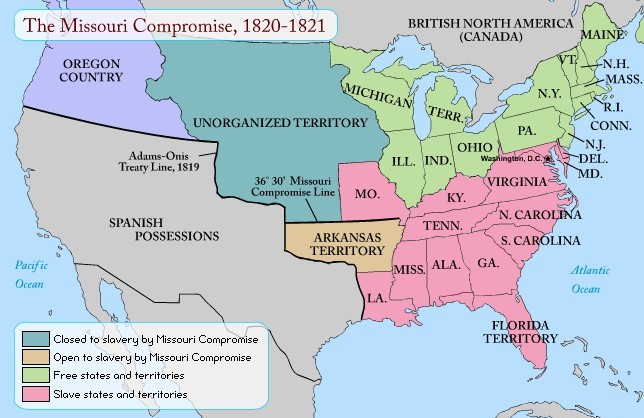
The Kansas-Nebraska Act of 1854, which explicitly repealed the Missouri Compromise and allowed for popular sovereignty in those territories, further exacerbated sectional tensions. The Dred Scott Supreme Court decision of 1857, which declared that slaves were property and had no right to sue for their freedom, further inflamed abolitionist sentiment in the North.
By 1860, the nation was irrevocably divided. The election of Abraham Lincoln, a Republican who opposed the expansion of slavery, triggered the secession of South Carolina and other Southern states, ultimately leading to the outbreak of the Civil War in 1861.
Conclusion: A Cautionary Tale
The 1850 Compromise Map serves as a stark reminder of the complexities and challenges of navigating deep-seated political divisions. While compromise is often necessary in a democratic society, it must address the underlying causes of conflict rather than simply masking them. The failure of the Compromise of 1850 to provide a lasting solution to the slavery question ultimately led to the bloodiest conflict in American history. It stands as a cautionary tale about the dangers of political expediency and the importance of addressing fundamental moral issues in the pursuit of national unity. The map, in its silent depiction of shifting boundaries and uncertain futures, speaks volumes about the fragility of peace when built on unstable foundations.